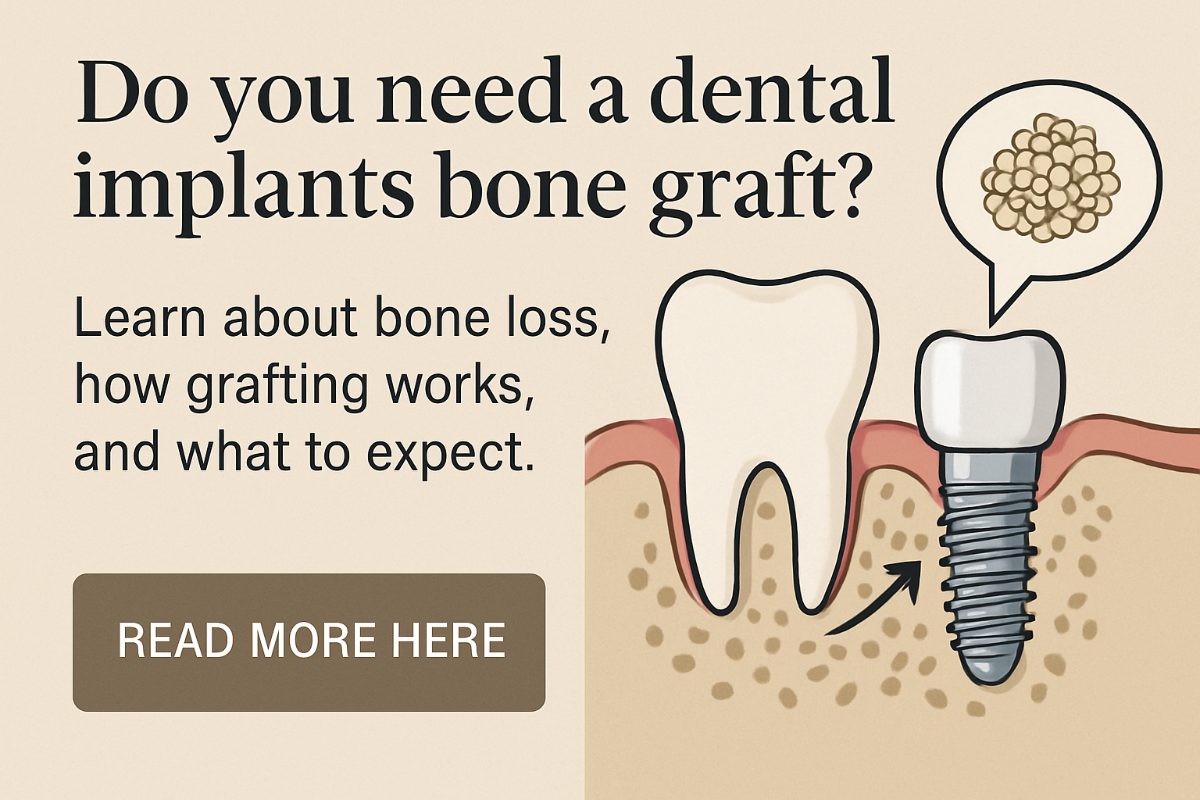
Many people ask, “Do I need a dental implants bone graft?” A bone graft rebuilds lost jawbone so an implant has enough support. This guide explains why bone matters, common causes of bone loss, how grafting works, what to expect, and when a graft is necessary for dental implants bone graft in Bellmore, NY.
Read on to learn causes of bone loss, the types of grafts dentists use, how specialists decide on grafting, and practical next steps you can take after a consultation.
Why bone matters for dental implants
Dental implants rely on strong jawbone to fuse and stay stable. Healthy bone holds the implant steady while you chew, speak, and smile. If there isn’t enough bone, an implant can fail, shift, or lead to long-term problems like infection or loss of surrounding teeth.
Placing implants in insufficient bone raises risks of poor integration, implant mobility, and early failure. That’s why evaluating bone volume and quality is a key step in implant planning for dental implants bone graft Bellmore, NY patients.
Common reasons people need a bone graft
Tooth loss and bone resorption
After a tooth is lost, the jawbone where the tooth sat begins to shrink. This process—bone resorption—can be rapid in the first year and continues slowly after that. The longer you wait to replace a missing tooth, the more likely you are to need a bone graft before implants.
Periodontal disease and infection
Gum disease and chronic infection can destroy bone around teeth. When bone is lost from periodontal disease, a graft may be needed to rebuild the ridge before a stable implant can be placed.
Trauma or congenital defects
Injuries, past extractions, or congenital differences can create gaps or thin areas in the jaw. These situations often require targeted augmentation to allow for proper implant placement and long-term support.
Types of bone grafts used with implants (dental implants bone graft)
There are several graft types depending on how much bone you need and where it’s missing. Your provider will recommend the best option based on your anatomy and implant plan for dental implants bone graft in Bellmore, NY.
Socket preservation
Placed at the time of extraction, socket preservation fills the tooth socket to maintain ridge shape and minimize future shrinkage. It’s a smaller graft and can reduce the need for larger procedures later.
Ridge augmentation and block grafts
These rebuild the width or height of the jaw. Block grafts use a piece of bone (often from the chin or hip) or a solid graft material to reconstruct substantial defects before implant placement.
Sinus lift
For upper back teeth, a sinus lift raises the sinus floor and fills the space with graft material when bone is too low to support implants.
Graft materials
- Autograft: bone from your own body — best integration but requires a donor site.
- Allograft: human donor bone — no second surgery, good success rates.
- Xenograft: animal-derived material — commonly used to preserve ridge shape.
- Synthetic grafts: biocompatible substitutes — avoid disease transmission and are widely available.
How your dentist decides if you need a graft
Decisions start with a clinical exam and dental history, then advanced imaging like a CBCT 3D scan. Measurements of bone height, width, and density are taken and used in surgical planning. If bone is insufficient for the chosen implant size and position, a graft is recommended.
Sometimes a graft can be done at the same time as implant placement; other times it’s staged and the implant goes in after healing.
What to expect during the graft and recovery
Most graft procedures are done with local anesthesia and sedation options. Steps usually include accessing the site, placing graft material, and covering with a membrane. Sutures and post-op instructions follow. Healing can take several months before implants are placed, though some same-day protocols allow immediate implants in select cases.
Common side effects are swelling, mild discomfort, and some bruising. Strict oral care, avoiding smoking, and following your provider’s instructions speed recovery.
Risks, success rates, and alternatives
Bone grafting has high success rates when performed by experienced clinicians and with proper patient health. Possible complications include infection, graft failure, or prolonged healing. Good medical control (e.g., diabetes management) lowers risks.
Alternatives when grafting isn’t possible include shorter or narrower implants, zygomatic implants for severe upper jaw loss, or fixed/removable prosthetics. Your specialist will explain pros and cons for your situation.
How to prepare and afford bone grafts for implants
Prepare by stopping smoking, optimizing nutrition, and managing chronic conditions like diabetes. Bring a list of medications to your appointment and follow pre-op instructions closely.
Insurance coverage varies. Many practices offer financing, payment plans, or third-party options. Ask for a written estimate and discuss staged approaches to spread cost if needed for dental implants bone graft in Bellmore, NY.
Why choose a specialist for bone grafting
Bone grafting and complex implant placement benefit from a specialist’s training and advanced technology. A periodontist or oral surgeon uses 3D imaging, guided planning, and refined surgical techniques to achieve predictable results and reduce complications.
Now Dental in Bellmore, NY, led by Dr. Mitchell A. Kaufman, is a periodontal and implant-focused practice offering advanced 3D imaging, same-day implant systems, and extensive grafting experience. With decades of experience and thousands of implants placed, they provide comprehensive care from planning through restoration.
Next steps
If you’re wondering whether you need a dental implants bone graft in Bellmore, NY, schedule a consultation for an exam and 3D scan. A personalized plan will show whether grafting is needed and outline timing, costs, and options. Contact Now Dental to book an evaluation and get clear next steps toward a stable, long-lasting smile.