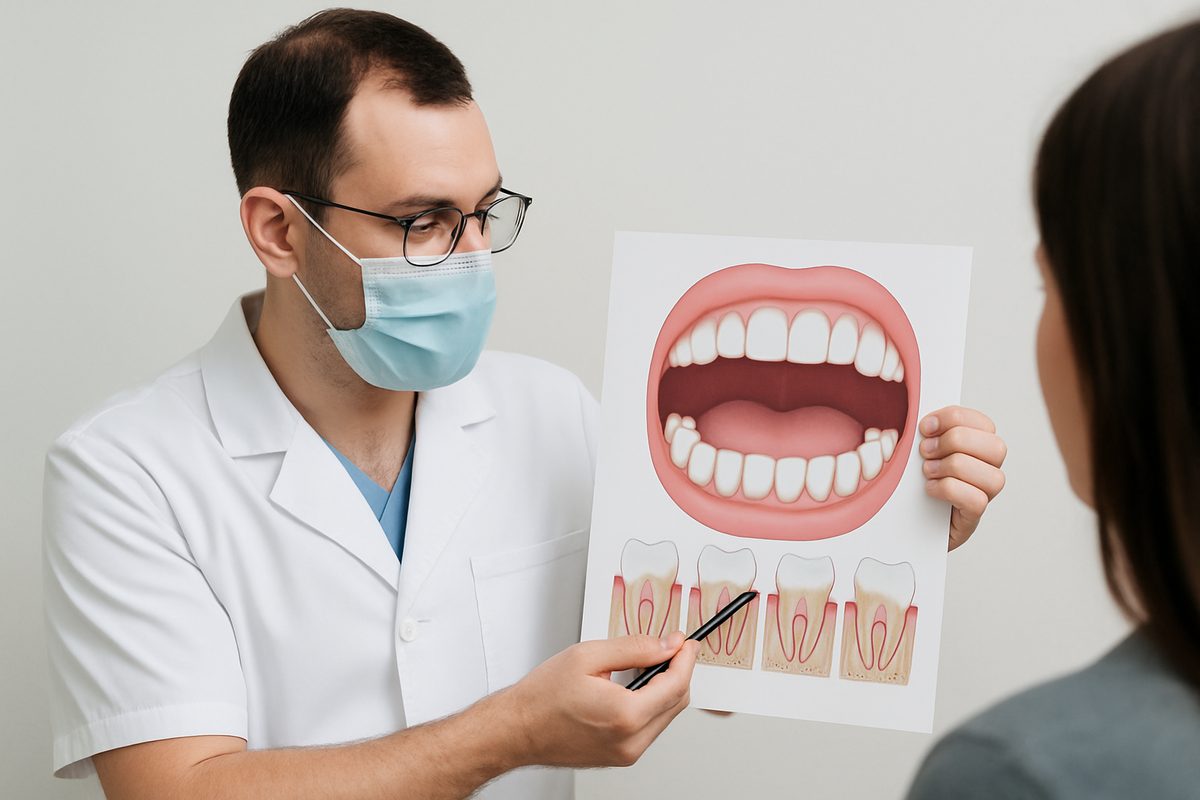
This post explains what perio. means and how it affects your mouth and overall health. You’ll learn the differences between mild and advanced gum disease, common signs to watch for, how perio. is diagnosed and treated, and when to see a specialist. If you live near Bellmore, NY, this guide will help you take practical next steps for healthier gums.
Read on for clear, actionable information about preventing and treating gum disease, plus how a periodontist can help restore oral health after perio. in Bellmore, NY.
What is perio. and why gum health matters
Perio. refers to periodontitis and the tissues that support your teeth — mainly gums and bone. Early gum inflammation is gingivitis; it’s reversible. Advanced perio. (periodontitis) damages the bone that holds teeth in place and can lead to tooth loss.
Gum disease also links to other health problems like heart disease and diabetes. That’s why early detection of perio. in Bellmore, NY is important: treating it early protects your teeth and your overall health.
Common signs and symptoms of gum disease
- Bleeding gums when brushing or flossing
- Persistent bad breath or a bad taste
- Gum recession (teeth look longer)
- Loose or shifting teeth
- Pus between teeth and gums
- Painful chewing or sore gums
If you notice loose teeth, pus, sudden swelling, or heavy bleeding, seek care now. These signs often mean active bone loss from perio. and need prompt attention.
What causes perio.: risk factors to know
Perio. begins when plaque and tartar build up along the gumline. Other common risk factors include:
- Smoking
- Poorly controlled diabetes
- Family history or genetics
- Certain medications that reduce saliva or affect gums
- Hormonal changes (pregnancy, menopause)
- Chronic stress and poor nutrition
Each factor raises the chance of developing perio. in Bellmore, NY or making existing disease worse.
How perio. is diagnosed
Clinical exam and periodontal charting
A periodontist measures pocket depths around each tooth with a probe. Depths over 4 mm, plus attachment loss, indicate periodontitis. These measurements show how much support the tooth has lost and guide treatment planning.
Imaging: X-rays and 3D scans
Bitewing and periapical X-rays show bone loss between teeth. A CBCT (3D) scan helps with complex cases, implant planning, and when bone loss is suspected but not clear on regular X-rays.
Lab and microbial testing
When infections are severe or treatment has failed, labs can identify bacteria and guide targeted antibiotics or host modulation therapy.
Treatment options for perio.
Non-surgical care: scaling and root planing
Deep cleanings (scaling and root planing) remove plaque and tartar below the gumline. Local or systemic antibiotics may be used. Many cases improve with thorough non-surgical therapy and good home care.
Minimally invasive options: laser therapy
Laser therapy can reduce bacteria and inflammation, often with less bleeding and faster healing. It’s used as an adjunct to deep cleaning in many practices treating perio.
Surgical treatments: flap surgery, bone grafts, ridge augmentation
If pockets and bone loss are severe, surgery may be needed to clean roots, reduce pocket depth, and rebuild lost bone and tissue using grafts and membranes. These procedures aim to stop progression and restore support for teeth.
Tooth replacement and implants after perio.
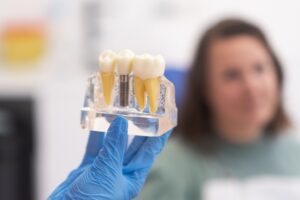
Once perio. is controlled, tooth replacement options include implants and fixed bridges. For patients needing multiple teeth, same-day or full-arch implant solutions can be planned — but only after active disease is managed and bone health is assessed.
Everyday prevention: keeping perio. at bay
- Brush twice daily with a soft-bristled brush
- Clean between teeth daily with floss or interdental brushes
- See a dental hygienist regularly for cleanings and monitoring
- Quit smoking and control blood sugar if diabetic
- Eat an anti-inflammatory diet rich in vegetables, lean protein, and omega-3s
Good daily care and professional maintenance reduce the chances of perio. returning.
When to see a periodontist
Seek specialist care if you have deep pockets (greater than 5 mm), rapid bone loss, loose teeth, persistent infection, or if prior treatments failed. A periodontist is also the right choice for complex bone grafting or implant planning after perio.
How to choose a periodontist
Look for board-certified credentials, years of experience placing implants, and use of modern imaging and laser technology. Clear treatment plans, upfront costs, and patient comfort measures are important. If you live near Bellmore, NY, ask about experience treating perio. in Bellmore, NY when you call.
About Now Dental and Dr. Mitchell A. Kaufman
Now Dental is a periodontal and implant-focused practice in Bellmore, NY led by Dr. Mitchell A. Kaufman. Dr. Kaufman is a board-certified periodontist with decades of experience and thousands of implants placed. The team emphasizes patient-centered, evidence-based care for whole-mouth health.
Advanced technologies Now Dental uses to treat perio.
Now Dental offers same-day implant systems for immediate tooth replacement, advanced 3D imaging and planning, laser dentistry for less-invasive care, digital restorative workflows, and comprehensive bone grafting techniques. These technologies improve outcomes after perio. treatment and speed recovery.
Quick FAQs about perio.
Q: Can early perio. be reversed?
A: Yes. Gingivitis (early gum disease) can be reversed with good care. Advanced perio. can be managed but usually requires specialist treatment.
Q: Are implants safe after perio.?
A: Yes — implants are safe after perio. if the disease is properly treated and maintained.
Q: How often should I see a hygienist if I have perio.?
A: Most patients with managed perio. need cleanings every 3–4 months; exact timing depends on disease severity.
Closing: next steps and contact
If you notice signs of perio., schedule an exam to check pocket depths, X-rays, and a treatment plan. At your first visit expect a focused exam, charting, and a clear plan for care or referral. Ask about personalized treatment options, timelines, and financing. To discuss concerns about perio. in Bellmore, NY, contact Now Dental to book a consultation with Dr. Mitchell A. Kaufman.