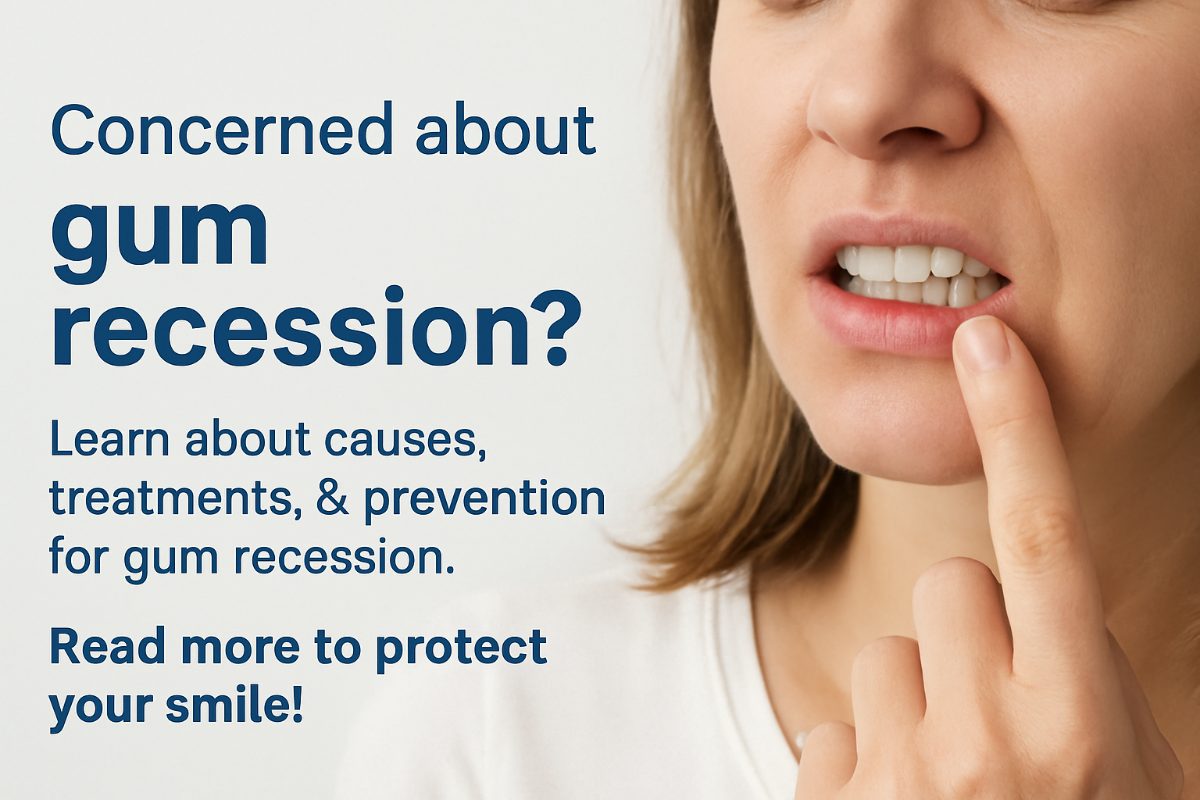
If the gum on one tooth is pulling back, you likely have localized gum recession. This can cause sensitivity, make the tooth look long, and raise the risk of root decay. This post explains why one-tooth gum recession happens, what to do right now, treatment choices, ways to prevent it, and when to seek specialist care for gum recession in Bellmore, NY.
What Is Gum Recession on One Tooth?
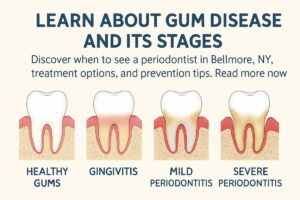
Gum recession means the gum tissue that normally covers the tooth root has moved away, exposing root surface. When it affects a single tooth, the problem is often local — one area of thin or damaged gum rather than a whole-mouth issue. A single receding site can lead to exposed root, higher sensitivity to hot or cold, faster wear, and a higher chance of root cavities.
Common Causes of Gum Recession on One Tooth in Bellmore, NY
Aggressive or improper brushing
Brushing too hard or using a hard-bristled brush can wear down gum tissue beside one tooth. Over years, a repeated scrubbing motion can create a notch at the gum line and cause gum recession in Bellmore, NY.
Localized gum disease (periodontitis)
Bacteria can attack the tissue around a single tooth, causing pockets and tissue loss. Localized periodontitis is a common cause of one-tooth recession.
Tooth position, bite, or orthodontic movement
Teeth that tilt, stick out, or have tight contact can thin the gum on one side. Orthodontic movement can also stretch thin gum and lead to recession over time.
Trauma, clenching, or piercings
A direct injury, chronic grinding or clenching, or lip/tongue piercings can damage gum around one tooth and start recession.
Poorly fitting restorations or dental work
Ill-fitting crowns, overhanging fillings, or excess cement can irritate the gum near one tooth and cause tissue to pull away.
How To Tell If That One Tooth Is Receding
Look and feel for these signs:
- Tooth looks longer or uneven compared to neighbors.
- A visible notch or groove at the gum line.
- Increased sensitivity to cold, sweets, or brushing.
- Food traps or more plaque buildup at that spot.
Your dentist will check probing depth, take X-rays and photos, and test mobility to measure tissue and bone loss around the affected tooth.
What To Do Right Now: Immediate Steps for Gum Recession
Take these simple steps today to limit damage from gum recession:
- Switch to a soft-bristled toothbrush and use gentle strokes.
- Use desensitizing toothpaste to reduce sensitivity.
- Avoid aggressive flossing right at the sore spot; be gentle.
- Rinse with warm salt water for short-term comfort and cleaner gums.
- Avoid acidic or very hot/cold foods that trigger pain.
- If the exposed root is sharp, a temporary dental wax or cotton can protect the lip until you see a dentist.
Call your dentist or a periodontist right away if you notice rapid change, severe pain, heavy bleeding, or if the tooth feels loose.
Treatment Options for Gum Recession on One Tooth in Bellmore, NY
Non-surgical options
For mild cases, treatment may include desensitizing agents, topical fluoride to strengthen exposed root, and bonding or composite material placed over the root to reduce sensitivity and protect against decay.
Surgical options
When tissue loss is significant, surgical grafts can restore gum and cover the root. Options include connective tissue grafts, free gingival grafts, and less invasive choices like the Pinhole technique or laser-assisted soft tissue procedures. These aim to rebuild gum, improve appearance, and protect the root.
Adjunctive care
Treating the cause is key. This can mean occlusal adjustment or a nightguard for grinding, orthodontics to move the tooth into a better position, or replacing faulty crowns or fillings to stop irritation.
How To Prevent Further Gum Recession
Prevent more recession by adopting these habits:
- Use a soft brush and learn a gentle brushing technique from your dental team.
- Floss daily, gently, to keep the area clean without damaging tissue.
- Attend regular periodontal maintenance cleanings if you have a history of gum problems.
- Quit tobacco, manage grinding with a nightguard, and treat gum disease early.
When To See a Periodontist for Gum Recession in Bellmore, NY
Seek specialist care for gum recession in Bellmore, NY if you notice increasing root exposure, constant sensitivity, deep pockets, loose teeth, or if the appearance bothers you. A periodontist can offer advanced grafting, laser therapy, and long-term plans to protect the tooth. If the tooth cannot be saved, they can plan implant-based replacement using 3D imaging and surgical expertise.
Short FAQ About Gum Recession
Will gum recession get worse if I ignore it?
Yes. Without treatment the recession can progress, exposing more root and raising the risk of decay and tooth loss.
Can gum recession be fully reversed?
Soft tissue lost to recession cannot regrow on its own. Surgical grafts can restore coverage and function, but prevention and early care are best.
Does gum recession mean bone loss?
Not always, but recession can be associated with bone loss. Your dentist will use X-rays to check bone levels if recession is present.
How long does treatment take and will it hurt?
Treatment time varies by method. Non-surgical care is quick. Surgical grafts usually heal in a few weeks; modern techniques and anesthesia keep discomfort minimal. Your provider will explain pain control and recovery details.
About Now Dental & How We Help with Gum Recession in Bellmore, NY
Now Dental is a periodontal and implant-focused practice serving Bellmore, NY. Led by Dr. Mitchell A. Kaufman, a board-certified periodontist and implant specialist, the team uses advanced tools like 3D imaging, laser dentistry, and same-day implant systems when needed. We evaluate the cause of single-tooth gum recession in Bellmore, NY and offer tailored plans — from desensitizing and bonding to grafting or bite correction.
If you’re worried about gum recession on one tooth, schedule an evaluation for gum recession in Bellmore, NY to get a clear diagnosis and practical next steps from a specialist.