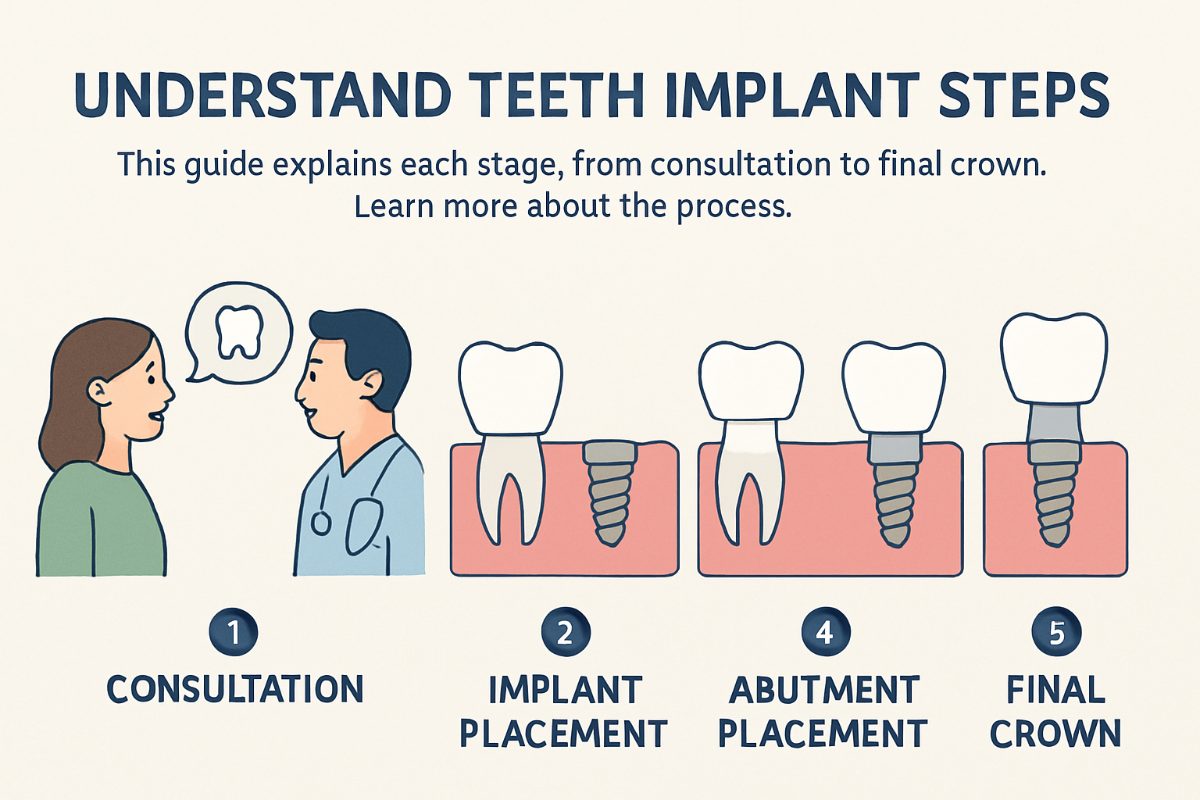
This clear guide walks you through the teeth implant steps in Bellmore, NY so you know what to expect from the first visit to the final crown. It explains the goals—replace missing teeth, restore chewing and speech, and bring back your smile—and notes that exact timelines vary by case. Use this as a practical roadmap for planning your care and asking the right questions.
Whether you need a single tooth or a full-arch solution, these steps show the common path most patients follow and when you may need extra care like bone grafting or soft-tissue work.
How Dental Implants Work (Quick Overview)
A dental implant is a titanium post placed into the jaw to act like a tooth root. A connector (abutment) and a crown, bridge, or denture attach to the implant to replace the visible tooth. Implants are different from bridges and dentures because they fit into bone and stop bone loss while offering strong chewing function and a natural look.
Understanding the teeth implant steps helps you plan recovery, budget, and expectations for long-term success.
Teeth Implant Steps: Initial Consultation & Evaluation
The first visit focuses on listening and assessment. Expect a medical and dental history review, an oral exam, and charting of missing teeth. The dentist or periodontist will ask about goals and any concerns.
Candidacy matters: doctors check bone volume, gum health, and medical conditions like diabetes or smoking that can affect healing. If you need tooth extraction or gum treatment, the team will talk about how that changes the timeline.
Advanced Imaging & Treatment Planning
Modern implant planning uses 3D CBCT scans and digital models to map the jaw and nearby nerves. This lets the team choose the right implant position and size before surgery.
Digital planning reduces risks, speeds surgery, and helps you see the proposed outcome. You’ll often get a clear plan and timeline after this visit.
Preparing the Mouth: Pre-Surgical Care
Before surgery you may be given instructions about medications, antibiotics, and stopping smoking. Good oral hygiene is essential. If you need extractions, gum therapy, or orthodontics, those are completed first.
- Follow medication directions exactly
- Stop smoking as recommended—smoking slows healing
- Control chronic conditions (e.g., diabetes) before surgery
Surgery Day: Placing the Implant
On surgery day you’ll discuss anesthesia or sedation options—local numbing, IV sedation, or general anesthesia depending on the case. The implant is placed in the bone, then the wound is closed.
Sometimes an implant and a temporary tooth are placed the same day (immediate placement or “full smile in a day”). Other times the implant is placed and left to heal before a crown is attached. Your plan depends on bone quality, infection risk, and the number of teeth being replaced.
Bone Grafting & Ridge Augmentation (If Needed)
Bone grafts are done when the jaw lacks volume to hold an implant. Materials can be your own bone, donor bone, or synthetic bone substitutes. Ridge augmentation rebuilds the jaw shape for better implant support.
Grafts add healing time—usually a few months—before the implant can be placed. Your provider will explain expected healing and how it affects the overall timeline.
Healing Phase & Osseointegration
Osseointegration is when the bone grows tightly around the implant. This usually takes 2–6 months depending on location and bone health. During this time you may have mild swelling, bruising, or soreness that is controlled with pain meds and cold packs.
Follow-up visits check healing and let the team replace temporary teeth if needed. Most patients can use temporary restorations for appearance and light function while the implant integrates.
Final Restoration: Abutment and Crown
After integration, the abutment is attached and impressions or digital scans are taken for the final crown, bridge, or denture. Modern digital workflows let clinicians check fit, bite, and appearance with high accuracy.
The final prosthetic is adjusted for comfort and function. Once it’s in place, routine dental care and regular checkups keep implants healthy for years.
Risks, Warning Signs, and When to Call Your Dentist
Complications are uncommon but can include infection, persistent pain, numbness, or a loose implant. Call your provider right away if you have heavy bleeding, severe uncontrolled pain, spreading redness, fever, or any signs of implant movement.
- Normal: mild pain, swelling, short-term numbness
- Call now: fever, pus, severe swelling, implant feels loose
How to Prepare & What to Expect Costs/Timeline-Wise
Typical timelines range:
- Single implant without graft: 3–4 months
- Implant with grafting: 4–9 months
- Full-arch same-day systems: possible in 1 visit plus follow-ups
Costs vary with the number of implants, grafting, and the type of final restoration. Insurance may cover part of the procedure; many practices, including those offering financing plans, provide financing plans to spread payments.
Why Choose a Periodontist for Complex Teeth Implant Steps
Periodontists specialize in implants and gum health. Their training helps manage complex cases like severe bone loss, multiple missing teeth, and full-mouth reconstructions. Choosing a specialist can improve predictability and reduce complications.
Now Dental and Dr. Mitchell A. Kaufman bring decades of implant experience, advanced 3D planning, same-day implant options, and digital restorations to complex cases. Their approach focuses on whole-mouth health—structure, function, and aesthetics—while keeping patient comfort a priority.
Next Steps / Contact & Scheduling
To schedule a consultation, call Now Dental or request an appointment online. Bring a list of medications, your medical history, and any recent dental x-rays if you have them. Expect a personalized plan and a clear cost and timeline estimate at your first visit.
If you’re ready to learn more about the teeth implant steps in Bellmore, NY, contact Now Dental to set up an evaluation and start planning your restored smile.