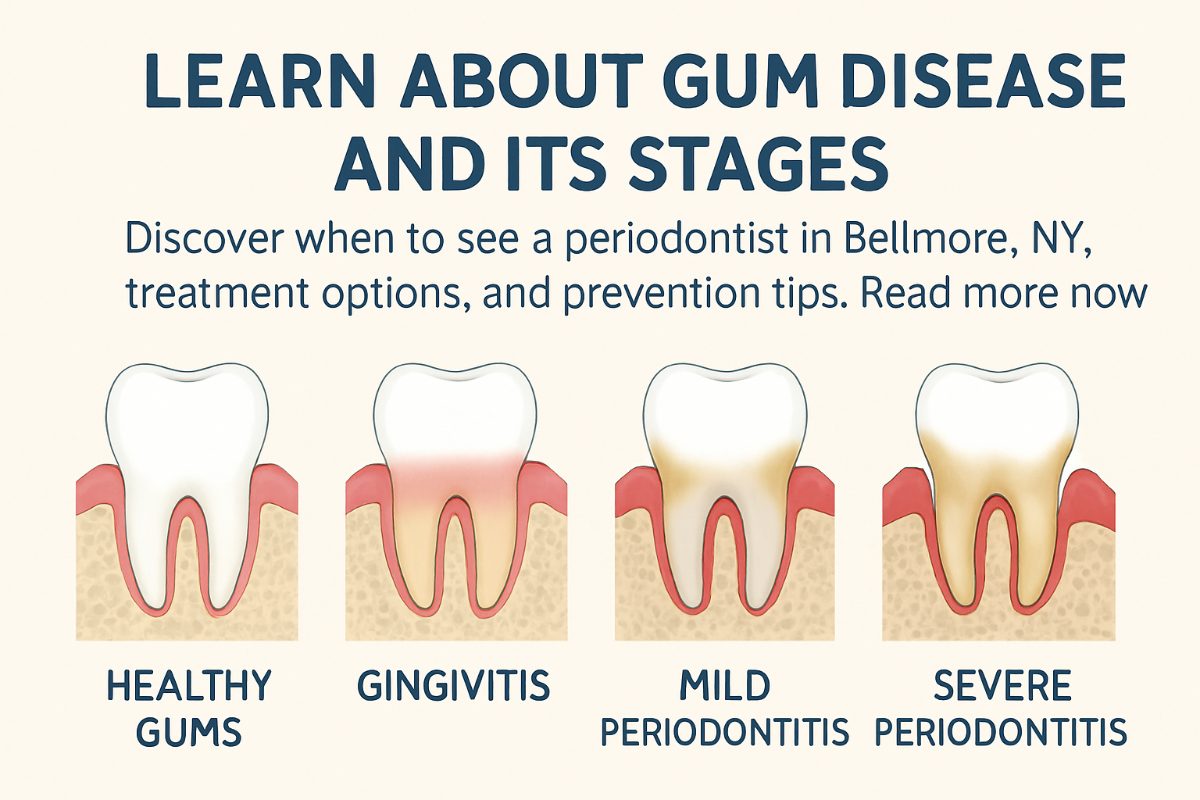
Gum disease is an infection of the gums and supporting structures around your teeth. Early stages are common and easily treated, but advanced disease can cause tooth loss and affect overall health. This post explains what gum disease in Bellmore, NY looks like, common causes, treatment options, and when to see a specialist or perodontist for advanced care.
Read on to learn early warning signs, what to expect at a periodontal consultation, and practical next steps for getting care for gum disease in Bellmore, NY.
What Is Gum Disease In Bellmore, NY?
Gum disease starts as gingivitis — inflammation of the gums — and can progress to periodontitis when the infection reaches bone and deeper tissues. Gingivitis causes redness and bleeding but is reversible with good care. Periodontitis destroys the bone that holds teeth in place and can lead to loose or lost teeth.
Gum disease is common among adults. Finding prompt local care for gum disease in Bellmore, NY helps reduce progression and makes treatment easier and less costly.
Signs And Stages Of Gum Disease In Bellmore, NY
Early Signs (Gingivitis)
- Red, swollen or tender gums
- Bleeding when brushing or flossing
- Persistent bad breath
Advanced Signs (Periodontitis)
- Receding gums and longer-looking teeth
- Loose or shifting teeth
- Pus around the gumline, chronic bad taste
- Visible bone loss on X-rays
Common Causes And Risk Factors For Gum Disease
Gum disease develops when plaque and bacteria build up along the gumline. Several factors raise the risk and speed progression:
- Poor oral hygiene and irregular cleanings
- Smoking or tobacco use
- Diabetes or other medical conditions that affect healing
- Certain medications that reduce saliva
- Genetics, aging, and hormonal changes
People with these risk factors may need earlier or more aggressive care for gum disease in Bellmore, NY and should be monitored more closely.
When To See A Perodontist Vs Your General Dentist For Gum Disease In Bellmore, NY
When To Start With Your General Dentist
Begin with your general dentist for routine care, screening, and early gingivitis. Your dentist can perform cleanings, check periodontal pockets, and recommend improved home care or simple scaling.
Red Flags To Refer To A Perodontist (Periodontist)
- Deep periodontal pockets (measured by probing)
- Visible bone loss on X-rays
- Loose, shifting, or painful teeth
- Failed prior non-surgical treatments
- Need for grafting, ridge augmentation, or implants after tooth loss
What A Perodontist (Perodontist) Does That General Dentists Don’t
A perodontist treats advanced gum disease and performs specialized surgery. Services include pocket reduction, soft-tissue grafts, bone grafting, ridge augmentation, and complex implant placement. These procedures help save teeth, rebuild lost bone, and restore function when general treatments aren’t enough.
Treatment Options For Gum Disease (From Non-Surgical To Surgical)
Non-Surgical Care
- Scaling and root planing (deep cleaning)
- Local or systemic antibiotics when needed
- Laser-assisted therapy for targeted bacteria reduction
- Regular maintenance cleanings to prevent recurrence
Surgical Care
- Flap surgery/pocket reduction to access and clean roots
- Gum grafts to restore lost soft tissue
- Bone grafting and ridge augmentation to rebuild support
Restoration And Replacement
If tooth loss occurs from untreated gum disease, implant-supported restorations are an option. Same-day implant systems and full-arch solutions can restore chewing, speech, and appearance while replacing missing teeth reliably.
Diagnosis And What To Expect At A Periodontal Consultation In Bellmore, NY
A typical periodontal exam includes probing pocket depths, full-mouth X-rays, and often 3D imaging for a detailed view of bone and roots. The specialist will review your medical history, identify risk factors, and recommend a tailored treatment plan.
Timeline: diagnosis and initial non-surgical care may take a few weeks. Surgical treatments and grafting often require planning and staged visits, with follow-up maintenance every 3–4 months for high-risk patients.
Preventing Gum Disease At Home And Long-Term Care
Daily habits and regular visits are the best prevention for gum disease in Bellmore, NY:
- Brush twice daily with a soft brush and fluoride toothpaste
- Floss or use interdental cleaners daily
- Quit smoking and manage systemic health like diabetes
- Keep regular dental cleanings and periodontal maintenance appointments
Choosing A Periodontist In Bellmore, NY — Why Consider Now Dental And Dr. Mitchell A. Kaufman
For advanced care of gum disease in Bellmore, NY, Now Dental focuses on periodontics and implants. The practice has more than 30 years of local service and has placed over 15,000 implants. Dr. Mitchell A. Kaufman is a board-certified periodontist with 25+ years of experience and advanced training.
Now Dental uses modern tools that help complex cases: advanced 3D imaging and planning, laser dentistry for less invasive soft-tissue care, and same-day implant systems for faster restoration when appropriate. These technologies support precise diagnosis and predictable outcomes for patients with moderate to advanced gum disease.
Getting Care For Gum Disease By Bellmore, NY
To schedule a periodontal consult, call the office or request an appointment online. Bring your ID, insurance information, a list of medications, and any recent dental X-rays if available. Ask about insurance coverage and financing options up front — many practices offer payment plans for surgical or implant care.
If you notice bleeding gums, persistent bad breath, or loose teeth, don’t delay. Early evaluation for gum disease in Bellmore, NY gives you the best chance to preserve your teeth and overall health.