This post addresses the common question, “How long do implants last?” and sets realistic expectations for implant longevity. You’ll learn typical lifespans and success rates, the most significant risks that shorten implant life, and straightforward steps you can take to make implants last longer. Use this as a practical guide to protect your investment and maintain a healthy smile.
What dental implants are and how they work
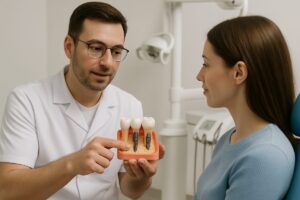
A missing tooth with three parts: the titanium implant (fixture) that goes into the jawbone, an abutment that connects the implant to the visible tooth, and the crown or prosthetic tooth. The implant fuses with bone through osseointegration, creating a stable, long-term foundation that functions much like a natural tooth root.
How long implants last — typical lifespan and success rates
Many dental implants last 10–30 years, and can become lifelong solutions when properly maintained. Clinical studies show long-term success rates around 90–95% at 10 years for healthy patients. Individual results vary, but with reasonable care and regular follow-up, implants commonly outlast traditional bridges and dentures.
Key factors that determine how long implants last
Several factors influence longevity. Some you control, others are medical or technical. Understanding them helps you protect your implant investment.
Daily oral hygiene
Brushing twice daily, flossing or using interdental brushes around the implant, and avoiding heavy plaque buildup are critical. Poor hygiene leads to peri-implantitis (infection around the implant) and is a leading cause of implant failure.
Smoking, medical conditions, and medications
Smoking reduces blood flow and healing, raising the risk of failure. Uncontrolled diabetes, immune disorders, and certain osteoporosis medications can impair bone healing. Inform your dentist about all health conditions and medications you are currently taking before your treatment.
Bone quality, grafting, and surgical placement
Dense, healthy bone supports implants best. If the bone is thin, grafting or ridge augmentation may be needed. Precise implant placement using 3D planning reduces stress on the implant and improves long-term success.
Prosthetic design and materials
Single crowns, bridges, and full-arch prosthetics place different loads on implants. High-quality materials and proper design (correct bite, balanced forces) reduce wear and fracture risk and help implants last longer.
Operator skill and follow-up care
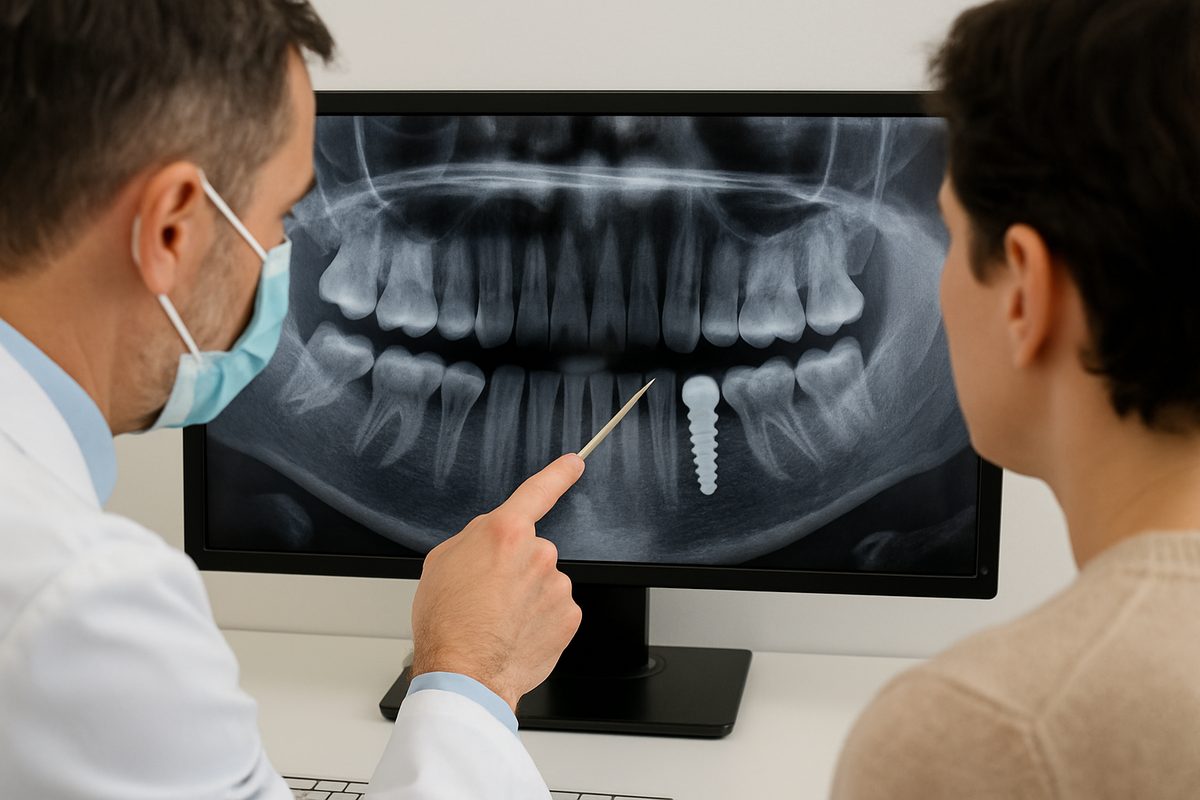
Experience in both surgery and restorative work matters. Proper technique and routine checkups, including X-rays, help catch early problems and reduce complications.
Warning signs your implant may be failing
Watch for persistent pain, looseness or mobility, swelling, bleeding or pus, gum recession around the implant, or changes in your bite. If you notice any of these, see your dentist promptly — early treatment often saves the implant.
Practical steps to extend implant life
Practice excellent daily cleaning, receive professional cleanings every 3–6 months as recommended, quit smoking, and consider using a night guard to treat grinding. Maintain routine dental visits and periodic X-rays to detect issues early and manage them before they become severe.
When a repair or replacement of a prosthetic cannot be done, the prosthesis can be repaired or replaced without touching the implant fixture. If the fixture fails or there’s severe bone loss, removal and replacement may be required. The choice depends on bone health, the presence of infection, and overall function.
About Now Dental and Dr. Mitchell A. Kaufman — experience that supports long-lasting implants
Now Dental in Bellmore offers advanced implant care with 3D planning, same-day implant options, and digital restorative workflows. Dr. Mitchell A. Kaufman is a board-certified periodontist with decades of experience in implant dentistry and thousands of implants placed, helping patients achieve predictable, long-lasting results.
Next steps and call to action
For a personalized answer about how long implants last in Bellmore, schedule a consultation. A brief examination, x-rays, and a review of your medical history will determine your implant prognosis and outline a plan to maximize its lifespan. Contact Now Dental to get started.