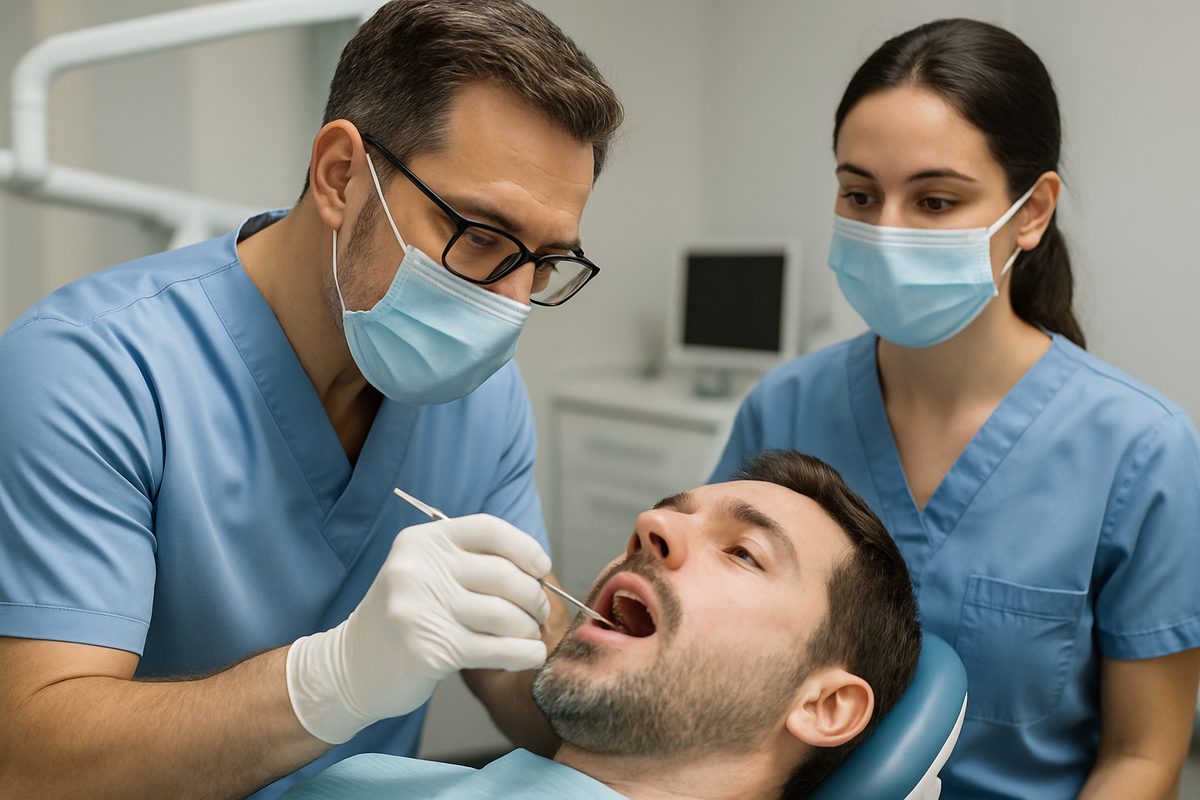
Periodontology is the dental specialty that focuses on the gums and the structures that support your teeth. If you’ve noticed bleeding when you brush, loose teeth, or gums that have pulled away from your teeth, periodontology matters to you. This field treats gum disease, protects bone and ligaments around teeth, and helps plan for implants and long-term oral health. If you’re searching for care, considering a periodontologist in Bellmore, NY will help you receive focused, specialized care for these issues.
What Is Periodontology?
Periodontology is the branch of dentistry that diagnoses, prevents, and treats diseases of the gums and the supporting structures of the teeth—bone, periodontal ligaments, and soft tissue. Periodontists manage early gum disease with non-surgical care and handle advanced problems with surgical procedures. Unlike general dentists who address overall dental health, periodontists concentrate on preserving the foundation that keeps teeth stable and healthy.
Who Is a Periodontist?
A periodontologist is a dentist who has completed extra years of specialized training after dental school. That training encompasses advanced surgery, implant placement, bone grafting, and the management of complex gum disease. Periodontists handle procedures such as deep cleanings, laser gum therapy, regenerative treatments, and implant surgery. Your general dentist will refer you to a periodontist when gum disease is advanced, when bone loss is present, or when implants and other support-restoring procedures are needed.
Why Gum Health Matters
Oral health and function
Healthy gums protect the roots of your teeth and help keep them stable. When gums recede or bone is lost, teeth can become loose, shift, or fall out. Good gum health preserves chewing ability, speech, appearance, and the long-term function of your natural teeth.
Links to whole-body health
Research shows connections between gum disease and overall health. Chronic gum inflammation has been linked to a higher risk of heart disease, worse blood sugar control in diabetes, and possible problems during pregnancy. Treating gum disease can reduce inflammation and may help improve overall health markers.
Common Signs and Risk Factors of Gum Disease
Look for these common symptoms: bleeding when brushing or flossing, swollen or tender gums, persistent bad breath, gums pulling away from teeth, loose teeth, or changes in bite. Risk factors include smoking, diabetes, poor oral hygiene, genetic predisposition, certain medications, stress, and hormonal changes. Early signs are often subtle—regular checkups help catch problems before they become severe.
Typical Periodontal Treatments
Non-surgical care: scaling & root planing
Scaling and root planing are deep cleanings that remove plaque and tartar from below the gumline. This allows the gums to heal and reattach to the tooth surface. Many patients experience improvement with careful home care and regular maintenance following these treatments.
Minimally invasive options: laser therapy
Lasers can target diseased tissue, reduce bacteria, and promote healing with less bleeding and faster recovery than traditional surgery. Laser therapy is beneficial for select cases and is often used in conjunction with other treatments.
Surgical care: flap surgery, bone grafting, ridge augmentation
When a disease has caused significant bone or tissue loss, surgery may be needed to restore support. Flap surgery provides the surgeon with access to clean roots and allows for the reshaping of the bone. Bone grafting and ridge augmentation rebuild lost volume, which is essential for stabilizing teeth or preparing the jaw for implants.
Periodontal maintenance
After active treatment, ongoing periodontal maintenance is crucial. These follow-up visits remove new deposits, monitor gum health, and help prevent relapse. Many patients need three- or four-month recall visits instead of the standard six months.
Periodontology and Dental Implants
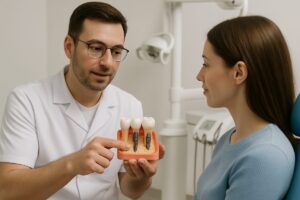
Periodontists plan and place dental implants to replace missing teeth. Successful implants require healthy gums and adequate bone. When bone is lacking, periodontists perform grafting to rebuild the site. Some practices offer same-day or “Full Smile in a Day” options that place implants and temporary teeth in a single visit, but long-term success still depends on maintaining good gum and bone health.
When to See a Periodontist
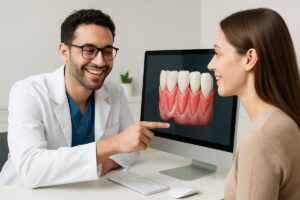
Ask for a referral if you have persistent bleeding, deep pockets on your dental chart, loose teeth, or significant bone loss on X-rays. At your first visit,, expect completell periodontal exam, probing to measure pocket depths, X-rays or 3D imaging, and a discussion of treatment options and timelines. Treatment timelines vary—non-surgical care can take a few weeks to months, while surgical reconstruction and implant work may take several months with healing phases.
Why Choose Now Dental and Dr. Mitchell A. Kaufman
Now Dental in Bellmore, NY, specializes in periodontal and implant care under one roof. Dr. Mitchell A. Kaufman is a board-certified periodontist with decades of experience and training from major institutions. The team focuses on evidence-based methods, precision implant placement, and whole-mouth outcomes. With a long history of serving the Bellmore community and thousands of implants placed, the practice offers experienced care for complex gum and implant needs.
Advanced Technologies That Improve Care
– Same-day implant systems for immediate tooth replacement and quicker return to function – Advanced 3D imaging and digital planning for accurate implant placement – Laser dentistry for less invasive soft-tissue treatment and faster healing – Digital restorative workflows for precise crowns, bridges, and implant restorations – Guided surgery tools that improve predictability and reduce chair time
Next Steps for Patients
If you notice symptoms or want to protect your smile, schedule a periodontal exam. Bring any recent dental records and X-rays, and ask about gum-focused treatment plans, implant options, and financing. Early treatment preserves teeth, bone, and overall health—seeing a specialist sooner often means simpler care and better long-term results.